Lightweight React UI Libraries: Ship Less JS and Rank Higher in 2026
Performance Index
Why Bundle Size is an SEO Metric
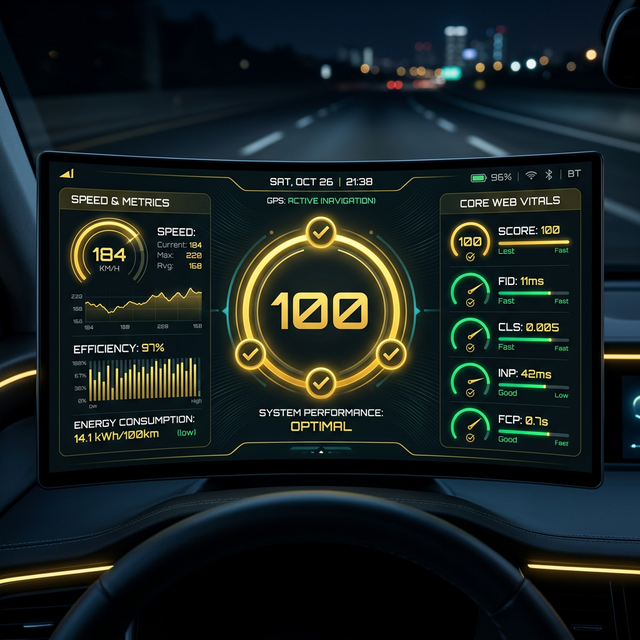
Performance is SEO: Scoring 100 on Core Web Vitals with lightweight components.
Google's search algorithm increasingly prioritizes User Experience (UX). Specifically, measurements like **Largest Contentful Paint (LCP)** and **Total Blocking Time (TBT)** are directly impacted by the size and complexity of your UI library.
If your optimized React navbar takes 2 seconds to become interactive because of a heavy JS bundle, your TBT will spike, and your rankings will suffer. Lightweight libraries solve this by using efficient, modular code that leverages the platform (HTML/CSS) rather than bypassing it with JavaScript.
Headless Libraries: The Performance Powerhouse
The lightest React libraries are those that ship zero CSS.
- Radix UI: Provides the accessibility logic for modals, tooltips, and tabs without any styling. You add the CSS yourself (with Tailwind or CSS modules), ensuring no unused styles are ever loaded.
- Floating UI: A tiny focused library for tooltips and popovers. It does one thing perfectly without the bloat of a "Total Framework."
The Power of "Un-Packaged" Components
The lightest possible component library is the one that has no entry point in your node_modules.
By using a "Copy-Paste" strategy, you avoid the tree-shaking issues that plague many npm-installed libraries. When you copy a React button component or responsive React form from IndoUI, you are adding only the specific lines of code needed for that component. There is no hidden library initialization, no global context providers, and no excess weight.
How IndoUI Optimizes for Speed
IndoUI is built with a "Performance-First" mindset.
- Tailwind Scrutiny: We use only standard Tailwind utilities, which are purged automatically in production.
- Primitive Logic: Our complex components like React data tables use standard React state and native array methods, avoiding heavy third-party table libraries whenever possible.
- RSC Ready: Our components are designed to be rendered on the server, sending pre-built HTML to the browser and only hydrating the necessary interactions.

Distilling code to its purest form: Minimizing the JS payload.
Frequently Asked Questions
Can a lightweight library handle complex data?
Yes! The weight of a library is about its architectural overhead, not its capability. A well-coded lightweight React table can handle 10,000 rows more efficiently than a heavy framework if it uses virtualization and native JS efficiently.
How do I measure my current UI library's performance?
Use 'webpack-bundle-analyzer' or 'source-map-explorer' to see exactly how many kilobytes your UI library is contributing to your main bundle. Anything over 100kb Gzipped is considered heavy for a modern app.
Explore Related React Components
Build Faster with IndoUI
Stop shipping bulk. Start shipping quality. Use our performance-optimized React components to create a blazing fast user experience that ranks better and converts more.
Explore Fast Components