The Great Debate: Copy-Paste UI vs. Component Frameworks in 2026

Comparative Index
The Evolution of Dependency Management
In the early days of React, we treated UI components like external services. If you needed a date picker, you installed react-datepicker. If you needed a button, you used react-bootstrap. This led to a "black box" architecture where you had zero insight into how your components actually worked.
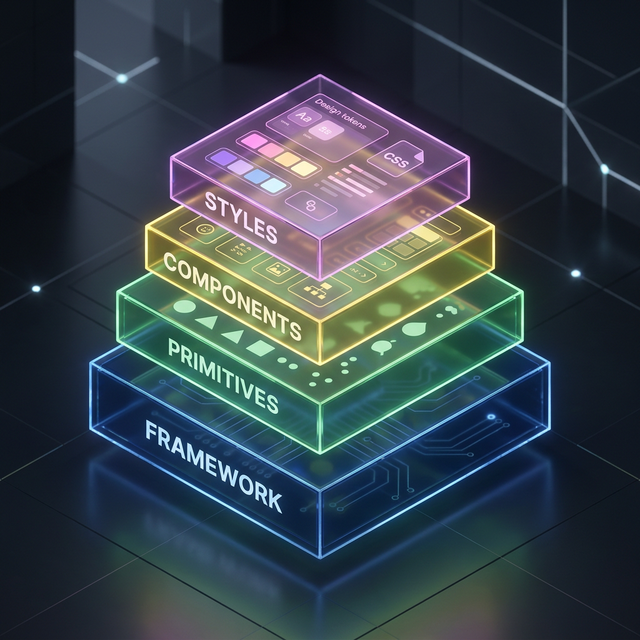
In 2026, the Headless UI movement has split the logic from the design. Libraries now provide the "skeleton" (the headless logic), and you provide the "skin" (the styling). This has birthed the Copy-Paste UI model, where sites like IndoUI provide the full, styled source code for things like responsive React navbars for you to drop directly into your source folder.
Why Developers Love Copy-Paste UI (The "Owned Code" Advantage)

Own your code: Full control over every line of your UI components.
The primary reason for the success of copy-paste kits is Control.
- No Version Lock: Your UI doesn't break when a library author decides to change a prop name or CSS structure. You own the code; it only changes when you change it.
- Maximum Customization: Want to add a unique animation to your accessible React buttons? You don't have to look for a
customStylesprop. You just edit the CSS/Tailwind classes directly in the file. - Zero Unused JS: Frameworks often include code for components you never use (like the "Circular Progress" component when you only needed a Modal). Copy-paste ensures your bundle only contains what's on the screen.
When Component Frameworks are Still Necessary
While copy-paste is great for marketing and customized SaaS apps, traditional frameworks still have a place in Enterprise Admin Tooling.
If you are building an internal tool with 500 different pages and don't care about a "unique" brand identity, a framework like MUI or Mantine saves you the trouble of managing thousands of lines of copy-pasted UI code. They provide a "System of Design" out of the box.
Decision Matrix: Which Should You Use?
Choose Copy-Paste UI if:
- • You need a unique, premium design.
- • You use Tailwind CSS (it's the native language of copy-paste UI).
- • Performance (LCP/TBT) is a top priority.
- • You want to "own" your code long-term.
Choose Frameworks if:
- • You are building purely internal dashboards.
- • Your team consists of non-designers who need "everything ready."
- • You don't know CSS/Tailwind and want to use props only.
- • Consistent "standardized" UI is more important than speed.
Frequently Asked Questions
Doesn't "Copy-Paste" make code maintenance harder?
Actually, it can make it easier. Since the code is in your repo, you can use global search and replace, or apply your own architectural patterns (like atomic design) to those components immediately.
Can I mix both approaches?
Yes! Many developers use a framework for complex React data tables but use copy-paste components for their navbars and modern cards to ensure the public-facing parts of the site are fast and beautiful.
Explore Related React Components
Experience the Freedom of IndoUI
Stop struggling with library limitations. Start copy-pasting high-performance components that you can completely customize to your brand's vision.
Start Building Today